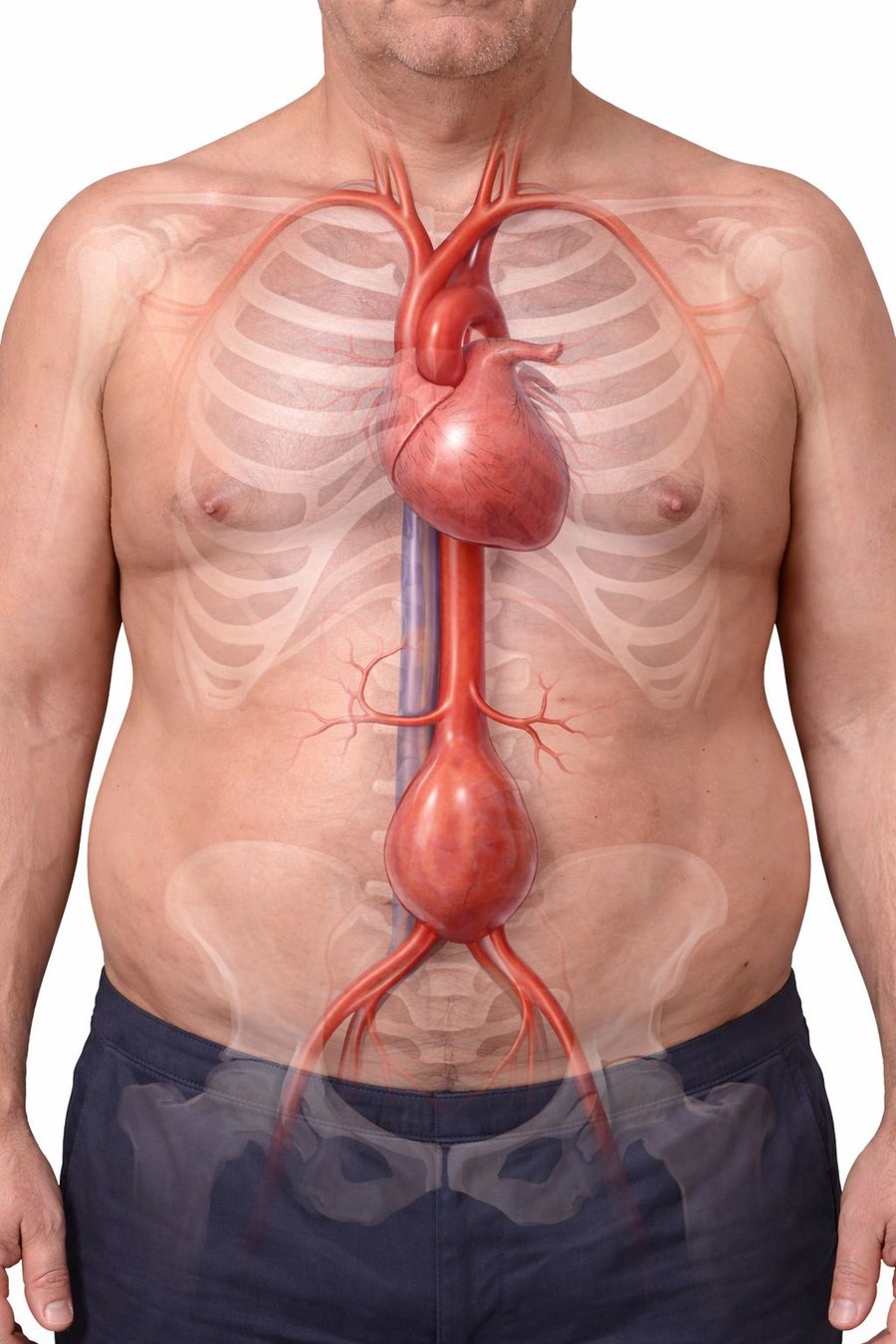
Anatomía interna con aneurisma aórtico

Aneurysm

Aneurysmal disease is the dilation of the arterial walls caused by a variety of factors. Arteriosclerosis is usually the most common cause, secondary to smoking, hypertension and hypercholesterolaemia; certain genetic abnormalities of the arterial walls can also contribute to their progressive deformation.

It can affect any artery in the body, although the abdominal aorta, the thoracic aorta and the popliteal artery (in the legs) are the most commonly affected.

When an artery becomes dilated, it can rupture and cause a haemorrhage that can be fatal. In the case of the popliteal artery, the complication is thrombosis and, as a result, blockage of the artery.

HOW DO WE TREAT ANEURYSMS?

ENDOVASCULAR TREATMENT: This is usually the treatment of choice nowadays, except in younger patients. It involves placing a system of tubes, known as stent grafts, through small incisions or punctures in the groin; these prevent the artery from rupturing and allow blood to flow normally. This is a minimally invasive technique and the patient can be back home within 48 hours.

SURGICAL TREATMENT: This involves a direct repair, replacing the dilated artery with prosthetic material. It is a more aggressive treatment that requires general anaesthesia, intensive care and a hospital stay of several days.

Reconstruction of an abdominal aneurysm repair

Before
After
Before
After
Before
After